
 CAD
CAD
We always recommend two strobes over one, but, in some cases and for some budgets, a single strobe is required. Is it impossible to get awesome images with just one strobe? No! Here are a few tips to get the most out of one strobe.
Positioning
Watch your shadows
One great advantage of two strobes is the ability to evenly light underwater scenes – thereby eliminating unwanted, harsh shadows. In the case of one strobe, we need to pay particular attention to how light from one direction is going to create shadows.
It’s inevitable that we’ll get SOME shadows. This is fine! In the ocean, there are shadows. But we want to create them in an intentional, natural-looking way.

Overhead, like the sun
One good place to start is by positioning your strobe high overhead, and slightly off to one side. This overhead position will mimic the light of the sun, creating shadows that look more natural than front-on. Positioning off to one side a but may help reduce backscatter. Remember, firing one strobe straight on outwards is a surefire way to pick up backscatter – always try to come at your subjects from an angle.
Spotlighting
Spotlighting is also a great technique to try with just one strobe. In this case, picture a wide angle scene that you find captivating, but with one point of emphasis. Maybe it’s a striking coral. Maybe it’s a stonefish or something else interesting. Use your strobe to spotlight that one focal point, within your wide angle scene that otherwise does not need more light. Shooting upwards and towards the sun, as always, is a good idea in this scenario.
Side lighting
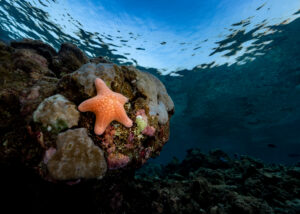
Side lighting can be a great way to create some terrific, dramatic images. As it sounds, this entails shooting your subject with light from the side, usually very physically close to the object. The shadows that are produced make for intriguing portraits. This can also be done with two strobes, from either side, or one strobe at higher power than the other and both from the side.
Snoots
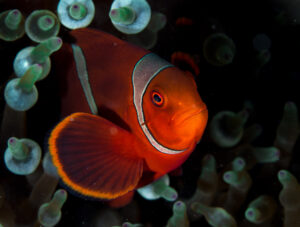
If you want to try even more creative effects, snoots are a more advanced, but often very rewarding, single strobe technique. In fact, snoot photography is one genre that typically requires one strobe, instead of two. If you’re not familiar, a snoot is a light shaping device that constricts the beam of a strobe down into a very small spotlight. Imagine an upside-down funnel, placed over your strobe (with the skinny side pointing out). This is, basically, a snoot.

A snoot from Big Blue.
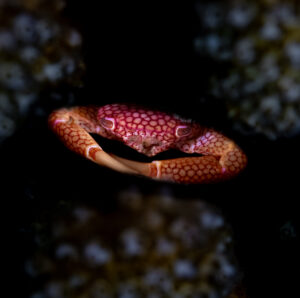
In macro photography, snoots provide great emphasis to interesting subjects, especially if the background is not of interest to you (for example, a muck dive). They can be challenging to aim, but some snoots now have prefocus light guides (and some used to have lasers that showed a red dot where the flash would be). Check out an example, here.
Questions? We’re here to help!

- Choosing Your First Underwater Camera in 2026 – May 15, 2026
- Strobes or video lights? A head-to-head comparison for the underwater photographer – October 23, 2023
- Shooting Video AND Stills on the Same Dive [Guide] – April 6, 2023