
 CAD
CAD
Many fantastic split shot images have been ruined by the tragic placement of aberrations on the topside surface portion of the dome. This is usually caused by water droplets that cause distortion in the final image.
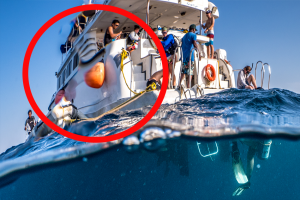
The only way to guarantee this will not happen in your image is to use a completely dry dome. If you keep the above water portion of the dome dry while shooting your split shot, this wouldn’t happen. But when does that happen!
So, unfortunately, there are no guarantees water droplets won’t make an appearance in the final image…water is unpredictable.
But there are some things we can do to minimize this risk.
Spit on your dome port
This is a famous one, because, well, you look like weirdo when you do it. But, yes, spitting on your dome port can help shed water and reduce water spots. Just like many use spit for mask anti-fog, this can work for your split shots as well.
Use an anti-fog product
Also like mask defogging, some people opt to use some sort of hair product or dedicated anti-fog product to help the dome port shed water. Shampoo or conditioner (hopefully one of many products that are not harmful to the reef), sponges, mask spray – these types of products can all be useful. Experiment with a few to see what works for you.
Dunk your camera before every shot
Dunking your camera before your split shots can be critical. It takes some time for the water to run off your port, but even after 30 seconds or so after dunking, most of the water has been shed by the dome and there are patches of dry and wet spots. These patches can cause nasty distortions in the image. If you take your shots immediately after dunking the camera, there will be fewer areas of the dome that are dry, and less distortion.
Rise and fall with the waves
Try to minimize the impact of the waves on your port. When water hits your port, it can splash up and throw droplets onto the above water area of your image. And, that impact can create messy water lines that you don’t want. Try to soften the blow by “cushioning” the waves, and physically rising and falling with them as opposed to fighting them.
Use a glass dome port
Although more expensive and heavier, glass dome ports shed water better than acrylic, and are thus better at keeping water droplets out of your images. If you can afford it, and manage the weight, these are typically better quality ports than acrylic. One trade off is, if you scratch your glass port, you’re stuck with that scratch. Acrylic ports can be buffed to remove scratches – although they are also easier to scratch.
Master Post-Production
Ok ok yes this might rile up the “I don’t use photoshop” crowd – but learning how to reduce or remove aberrations in post is an extremely valuable skill. Adobe Lightroom offers excellent clone and mask brush tools, and there are countless ways to manipulate water droplet distortion if you’re using Photoshop.

- Choosing Your First Underwater Camera in 2026 – May 15, 2026
- Strobes or video lights? A head-to-head comparison for the underwater photographer – October 23, 2023
- Shooting Video AND Stills on the Same Dive [Guide] – April 6, 2023