
 CAD
CAD
How to Photograph Marine Life Underwater
Shooting marine life underwater is one of the most rewarding parts of underwater photography. Every subject behaves differently, and that means every dive gives you a new challenge.
A blenny hiding in a small hole, a turtle moving slowly across the reef, a shark staying just out of range, or a nudibranch crawling across coral all need a different approach.
The best underwater images usually come from patience, positioning, lighting, and respect for the animal. You need to understand how the subject moves, how close it may allow you to get, what angle makes it look stronger, and how your camera setup affects the final photo.
This guide covers practical tips for photographing common underwater subjects, from tiny macro critters to larger animals like sharks, rays, and turtles.
Quick Gear Checklist for Marine Life Photography
Before choosing camera settings or lighting, think about the type of marine life you want to photograph.
Small subjects like blennies, shrimp, crabs, seahorses, and nudibranchs usually work best with a macro setup. Larger subjects like sharks, turtles, rays, coral scenes, and schooling fish usually need a wide-angle setup.
Useful Mozaik gear categories:
- Underwater Camera Housings
- Underwater Strobes
- Underwater Video Lights
- Underwater Macro Lenses
- Underwater Wet Wide Angle Lenses
- Fiber Optic Cables
- Underwater Arm Systems
Mozaik expert note:
The best setup depends on your camera, housing, lens mount, trigger method, and the type of subjects you shoot most often. Before buying a strobe, wet lens, or arm system, always check compatibility with your exact housing.
Blennies
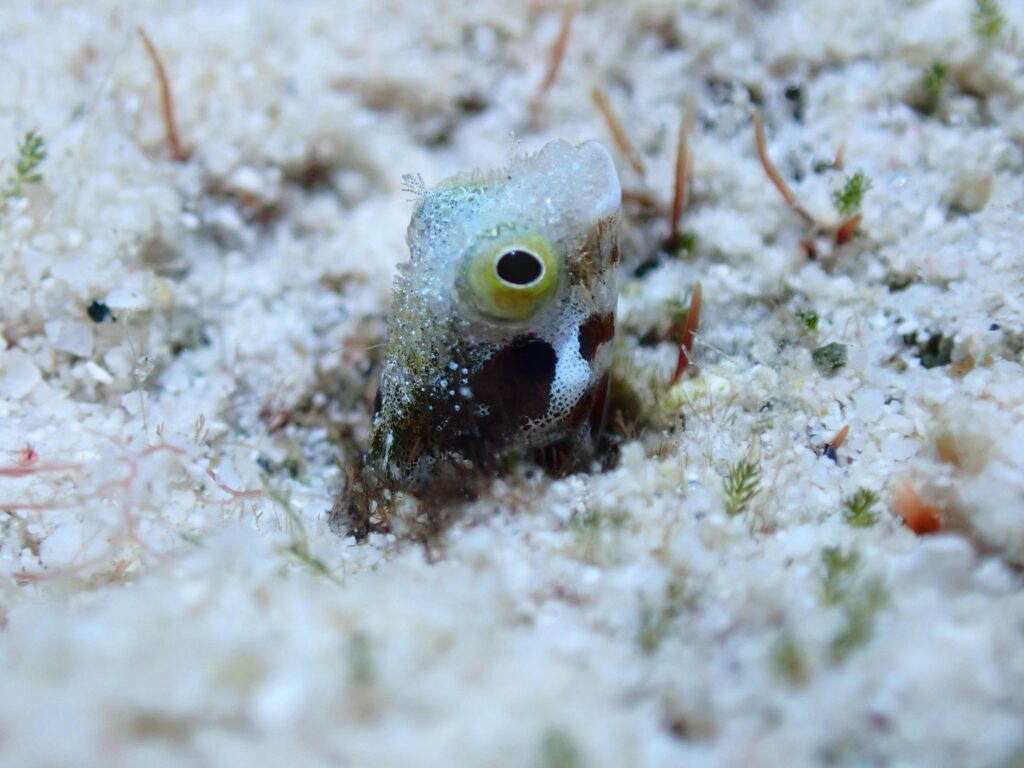
Blennies are one of the best subjects for practicing underwater macro photography. They are expressive, colorful, and often surprisingly confident once they are inside their hole.
The great thing about blennies is that they usually let you get close. That gives you time to test your focus, lighting, diopter, and composition without chasing a fast-moving subject around the reef.
Focus is the most important part. The eyes need to be sharp because that is where the viewer will look first. If the mouth and teeth are also in focus, the image can feel even stronger.
Try to wait for the blenny to pop out of its hole. That moment may only last a second, but it often creates a better photo than a simple static headshot. Shooting from the side can also help separate the head from the background and create better color separation.
If the blenny is on rock, sand, or a man-made surface, control your buoyancy carefully so you can stay steady without touching the reef.
Gear tip:
For small subjects like blennies, a macro lens or wet macro diopter can help fill the frame while keeping the subject sharp. You can explore Mozaik’s macro lens options here:
Underwater Macro Lenses
Sharks

Sharks are one of the most exciting underwater subjects, but they are not always easy to photograph. Many sharks are cautious around divers and may stay farther away than you want for a strong image.
The first step is understanding the species you are photographing. Some sharks, like nurse sharks, are easier to approach and may stay still long enough for close portraits or side profiles. Others may keep their distance, which means you need to think more about the full composition.
When a shark does not come close, avoid relying on a small shape in empty blue water. A better approach is to find a clean coral foreground, shoot slightly upward, and include the shark in the background. This gives the image more depth and makes the scene feel more complete.
Wide-angle lenses are usually the main choice for sharks. If the shark comes close enough, you can also shoot tighter portraits or detail shots.
With whale sharks, the best results often come from respectful positioning, shallow-water settings, and continuous burst shooting so you do not miss the short moments when the animal is close.
Gear tip:
For sharks and larger animals, a wet wide-angle lens can help you include more of the scene while staying close enough for better color and clarity.
Underwater Wet Wide Angle Lenses
Rays

Rays are excellent subjects because they are graceful, beautiful, and often move slowly enough to photograph with care. Stingrays, manta rays, and mobula rays all create different opportunities, but the same basic rule applies: move calmly.
If you see a ray resting in the sand, approach slowly and from the front so it can see you. Look for the eyes and tail peeking out, then move carefully into position. A calm approach gives you a much better chance of getting a close front-facing image.
For swimming rays, patience matters. Chasing usually leads to a rushed shot from behind. Watch the ray’s behavior and move in a wide, calm path if it allows you to approach.
Eye-level or slightly lower angles usually make rays look more impressive than shots from above. At manta cleaning stations, you may not be able to get close, so pointing the camera upward and using coral in the foreground can create a stronger image.
At night manta dives, careful light placement helps create shape while reducing backscatter from particles in the water.
Mozaik expert note:
For rays, turtles, sharks, and reef scenes, strobe position matters as much as strobe power. Keep your strobes wide enough to avoid lighting particles directly in front of the lens.
Octopuses
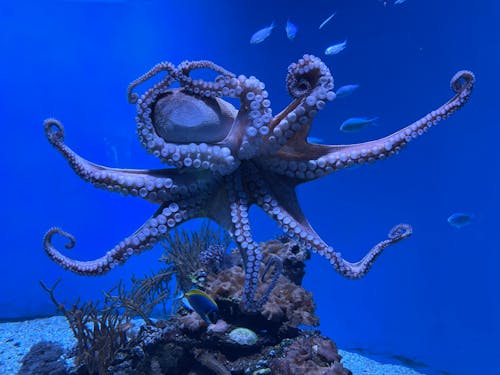
Octopuses are strange, intelligent, and unpredictable, which makes them fascinating subjects. Some hide immediately, while others may stay out, interact, or move slowly enough for a careful photo.
Night dives are often the best time to photograph octopuses because they come out to hunt. Some may move away from your light, while others may seem curious.
If an octopus has a good hiding place, stay calm and give it time. It may come out just enough for a stronger image. When the hiding place is not secure, you may only have a short chance before it moves away.
If an octopus allows you to get close, you can often create strong portraits or close-up images of the eye. Pay attention to its behavior and avoid pushing it if it clearly wants to leave.
Blue-ringed octopuses should be photographed with extra care and distance because they are highly venomous.
Gear tip:
For night dives and behavior shots, video lights can help with focus, framing, and subject visibility.
Underwater Video Lights
Parrotfish

Parrotfish are colorful, active, and full of character. They are also important reef animals, known for feeding on coral and helping produce the soft sand many divers recognize from tropical beaches.
They can be approachable, especially larger individuals, but they will move away if you behave like a predator. Move slowly and let the fish get comfortable with your presence.
A good action shot often happens when the parrotfish bites coral. That moment gives the image more energy than a simple side view.
At night, parrotfish are easier to photograph because they stay still while sleeping. You may also see them beginning to create their mucus cocoon, which can make for an unusual image.
Close-ups of the mouth, face, or scales can work well, especially when the fish is calm enough for you to control your lighting and focus.
Moray Eels
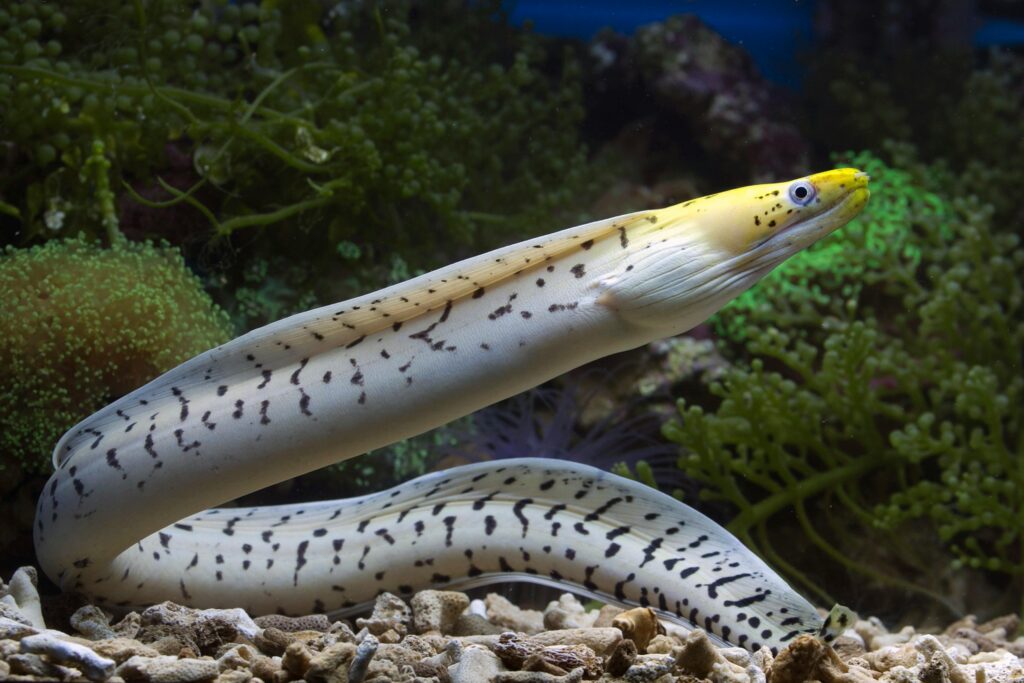
Moray eels are classic underwater subjects. Before diving, many people imagine eels as scary, but underwater photographers quickly learn how expressive and beautiful they can be.
During the day, moray eels usually hide in holes, with only the head or tail visible. At night, they are more likely to hunt in the open.
A moray eel often allows a close approach, especially when it feels secure in its hole. This makes it a good subject for face portraits, close-ups, and detail shots.
Look for cleaning behavior as well. Cleaner shrimp or small fish may move around the moray’s jaw or gills, creating a much more interesting behavior shot.
Sometimes morays hunt with groupers. If you see this, it can create a strong image of two predators moving together across the reef.
Gear tip:
Moray eels often sit inside dark spaces, so controlled strobe placement is important. A strobe can restore color and add contrast when used carefully.
Underwater Strobes
Crabs and Shrimp

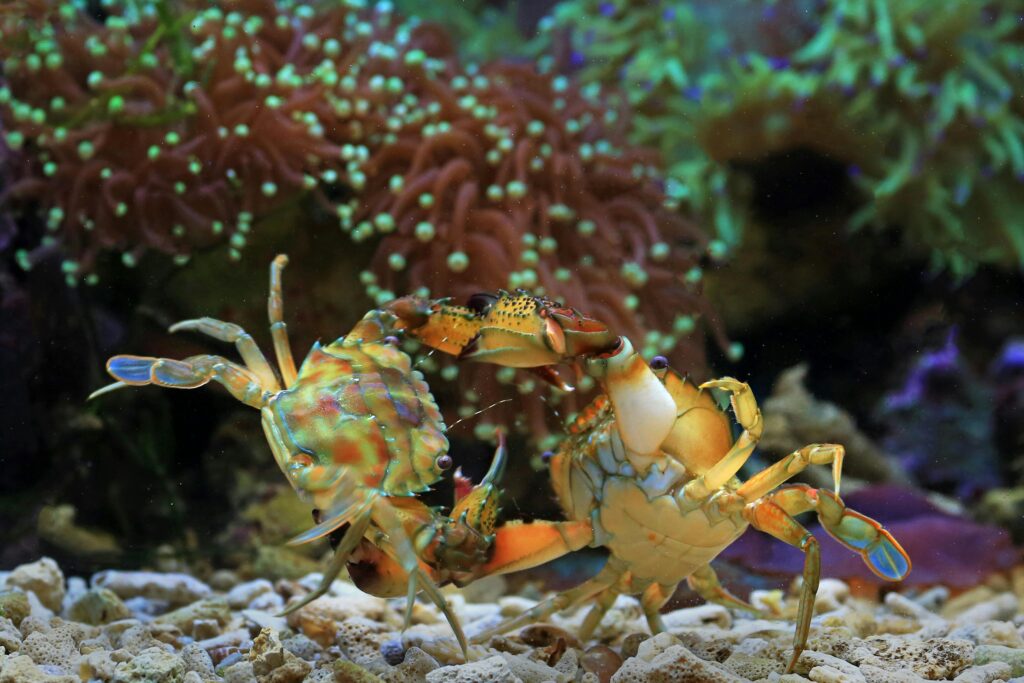
Crabs and shrimp are often overlooked, but they can be excellent macro subjects. They are expressive, colorful, and found in many different environments, from sandy bottoms to coral heads and night dive sites.
A good way to find crabs is to look for moving shells. Hermit crabs are common, and they can make great subjects when you slow down and pay attention.
With shrimp, the challenge is focus. Their eyes are often extended away from the body, and the camera may try to focus on claws or antennae instead. Learning where the eyes are before you shoot makes a big difference.
Banded coral shrimp are easy to spot because their long white antennae often appear before the body does. Cleaner shrimp often live with anemones and may come out when you approach.
At night, shrimp eyes reflect light, which makes them much easier to find. You may see many small pairs of glowing eyes across the reef.
Lighting can be tricky when a crab or shrimp is hiding inside coral. Careful strobe placement helps the light reach the subject instead of only hitting the coral around it.
Mozaik expert note:
For tight macro work, one of the biggest upgrades is control. A good arm system lets you position your light more precisely around coral, holes, and small subjects.
Underwater Arm Systems
Seahorses
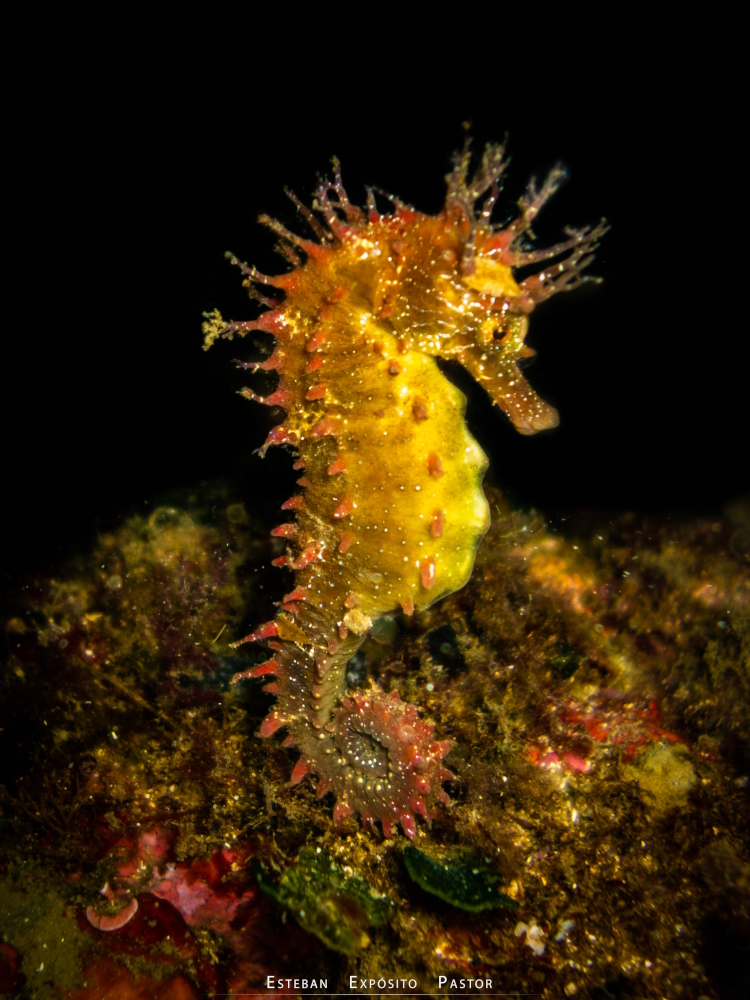
Seahorses are some of the most loved subjects underwater. They are unusual, delicate, and exciting to find because they rely so heavily on camouflage.
The good news is that seahorses do not move much when left alone. A seahorse may stay in the same area for a long time, which gives photographers a chance to return and try again. The important part is to be respectful and avoid stressing the animal.
Seahorses often turn away from divers, which can make them frustrating to photograph. If you stay calm and avoid crowding them, you may get a cleaner face angle.
Pygmy seahorses are much harder. They are tiny, well camouflaged, and very difficult to focus on. Good buoyancy is essential because even small movement can ruin the shot.
Backlighting can work well with seahorses because their shape and texture stand out nicely when lit from behind.
Gear tip:
For seahorses and pygmy seahorses, macro lenses and accurate lighting control are usually more important than raw camera power.
Clownfish
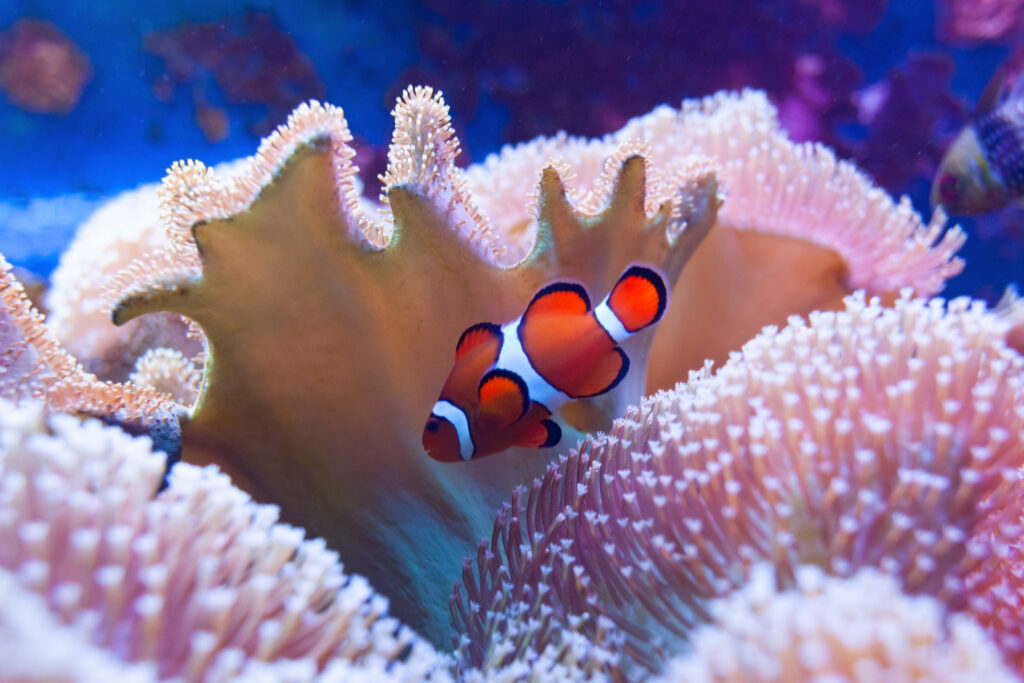
Clownfish are easy to recognize and fun to photograph because they live in anemones and often react strongly when you get close.
Their protective behavior can help create better images. When they defend the anemone, they may face the camera and give you strong poses. If they feel too threatened and leave the anemone, back off and let them return.
A useful technique is to choose a nice part of the anemone as your background, frame it, and wait for the clownfish to swim into position. Chasing the fish around usually leads to messy framing and missed focus.
Look for eggs near the anemone as well. The male clownfish may stay close and move water over them, which can create a strong behavior shot.
Wide-angle shots can also work when you shoot from below and include the sun in the background, as long as you still get enough light on the clownfish.
Nudibranchs
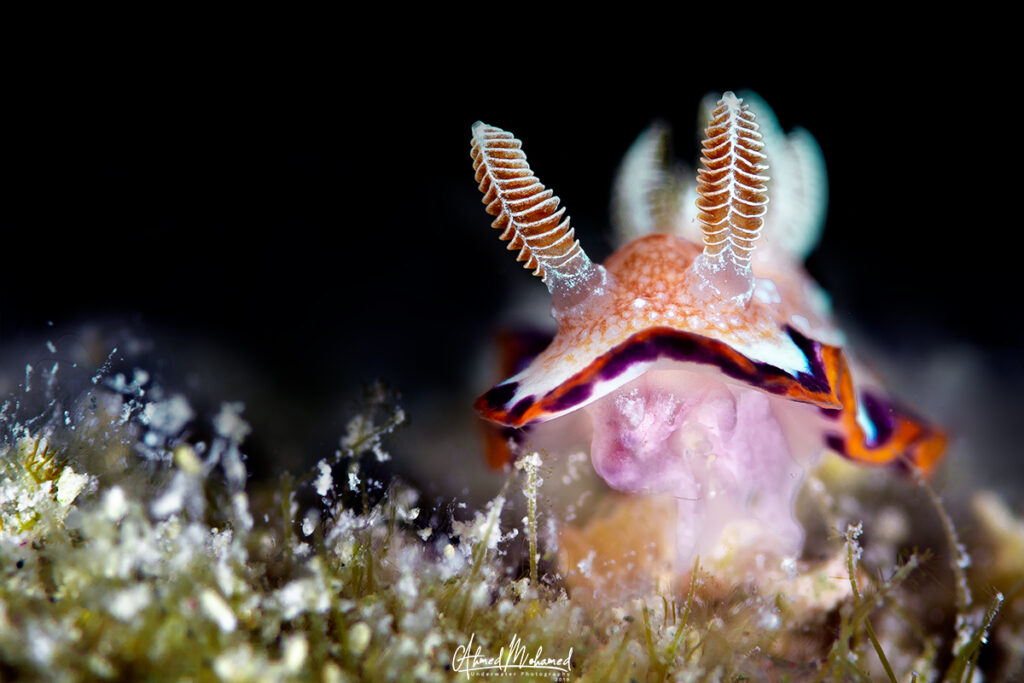
Nudibranchs are favorite subjects for many underwater photographers. They are colorful, slow-moving, and come in a huge variety of shapes and sizes.
The best nudibranch photos are usually taken from a low angle. This makes the subject feel more alive and helps create a softer, cleaner background.
With nudibranchs, focus is usually placed on the rhinophores because the eyes are often too difficult to see. The challenge is finding the front of the animal, especially with species that have less obvious features.
Try to photograph nudibranchs when they stretch upward or crawl over a small edge. That pose gives the image more shape and energy than a flat top-down view.
A smaller aperture helps keep more of the nudibranch in focus. Wide apertures can make the depth of field so thin that only a tiny part of the subject is sharp.
Because nudibranchs move slowly, they are also great subjects for trying creative lighting, including black backgrounds, backlighting, and snoot lighting.
Gear tip:
For nudibranchs, a macro lens, stable buoyancy, and controlled strobe angle usually matter more than speed.
Pipefish
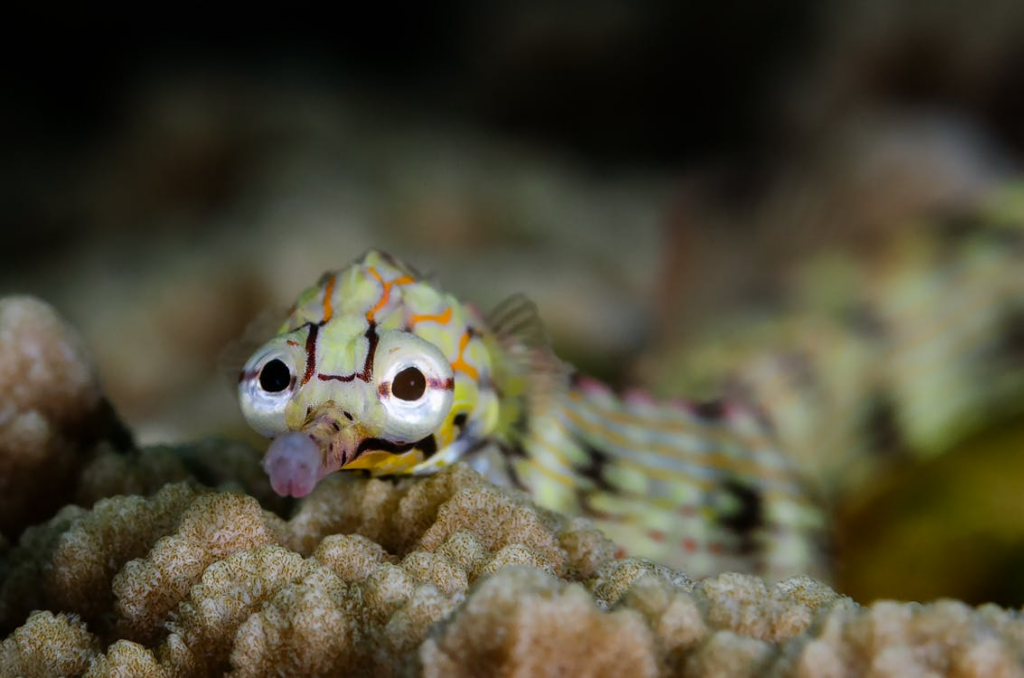
Pipefish are unusual subjects, and many divers are excited when they find them. Their long bodies can look awkward from above, so the angle matters a lot.
Eye-level shots are usually much stronger. When you focus on the face and let the body fall slightly into the background, the image becomes more interesting.
Red Sea pipefish can be friendly subjects because they often stay around soft coral and do not move too quickly. They may keep some distance if you get too close, but they often pause long enough for a careful shot.
Ghost pipefish are more difficult because they rely heavily on camouflage. They often float near coral, seaweed, or branches that look similar to their bodies.
Close-up pipefish images can be especially interesting when you capture the texture around the head and gills.
Coral
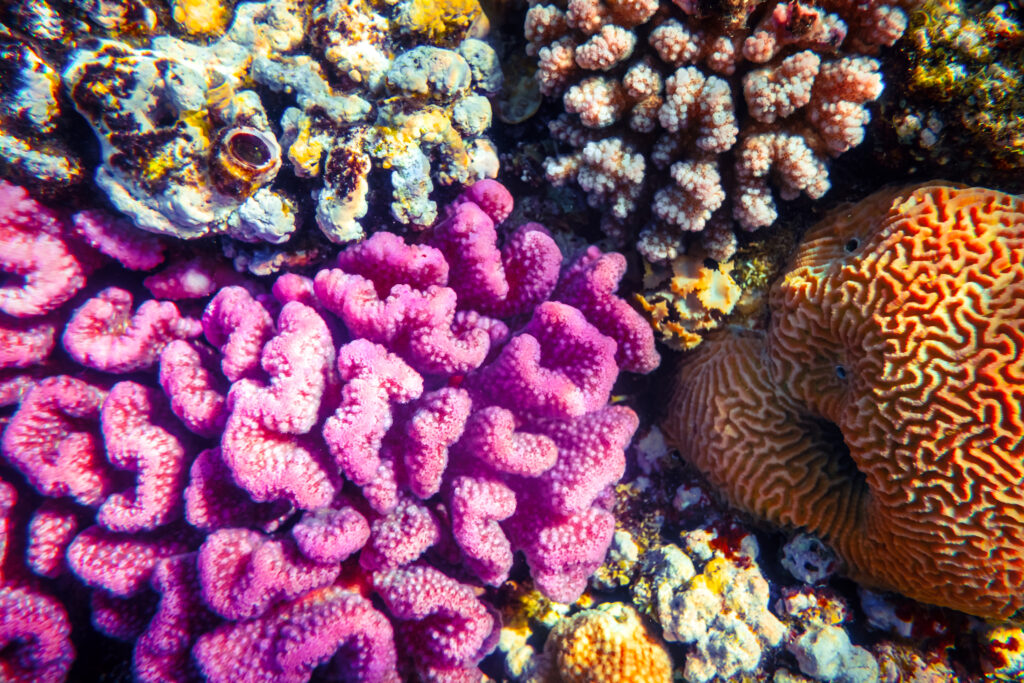
Coral is often treated as the background, but it can be a strong subject on its own. It comes in many shapes, colors, and textures, and it is one of the best things to practice on when testing new gear.
Because coral does not move, it gives you time to work on focus, lighting, color, and composition before trying the same settings on fish or other moving subjects.
Texture is one of the best reasons to photograph coral. Side lighting with one strobe can bring out the shape of the polyps and make the image feel more detailed.
Coral works for both macro and wide-angle photography. With macro, you can focus on close textures and patterns. With wide angle, you can show larger coral structures against blue water or the surface.
Coral can also help improve images of animals that are too far away. If a shark, ray, or turtle will not come close, using coral as a foreground can make the photo feel more complete.
Be careful around coral, especially when using a dome port. Hard coral can scratch a dome, and poor camera positioning can damage the reef.
Mozaik expert note:
Coral is a great subject for testing a new housing, strobe, lens, or arm setup because it lets you adjust slowly and see how your lighting changes texture, color, and contrast.
Turtles
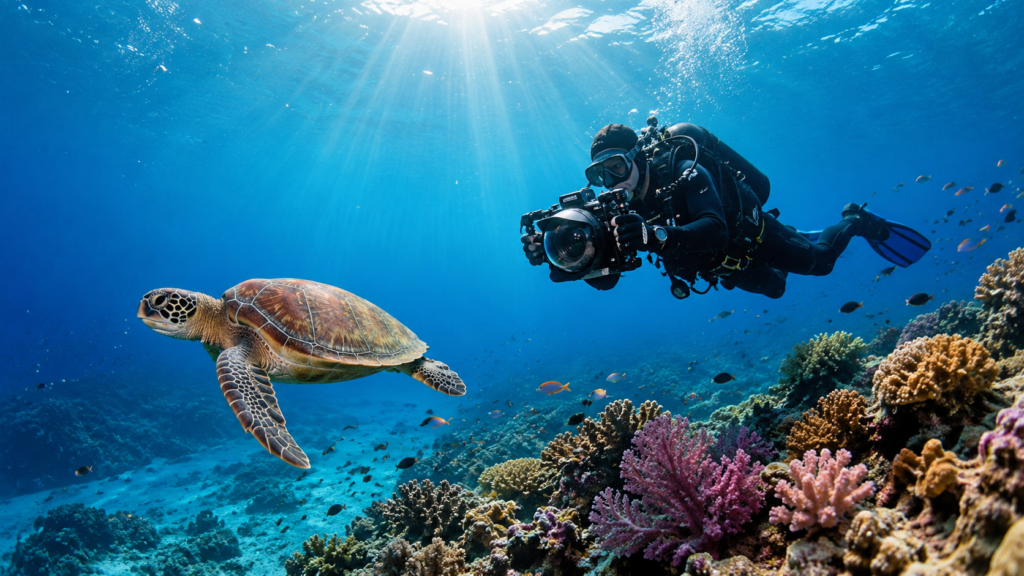
Turtles are calm, familiar, and always exciting to photograph. They are often easier to approach than many larger marine animals, but your behavior still affects the final shot.
Do not swim straight at a turtle. Move around it calmly. This gives you a better chance of getting a close face or profile shot without making the turtle leave.
Eye-level or slightly lower angles usually look much better than shots from above. From below, turtles appear stronger and more graceful, especially when they are swimming.
Action makes turtle images more interesting. If a turtle is feeding, you may capture strong poses as it bites coral or sponge. Sometimes other fish will gather nearby to feed on leftovers, adding more life to the frame.
When a turtle goes up for air, it may return to the same area, so it can be worth waiting nearby.
Even if you are diving with a macro lens, you can still photograph turtles. Close-ups of the eye, shell texture, or face can create strong detail images.
Fin position also matters. A turtle looks more dramatic when the fin is fully up or fully down, so timing your shot carefully can make the image feel more polished.
Final Thoughts
Marine life photography is strongest when you match your approach to the subject in front of you.
Small critters need patience, focus, buoyancy, and careful lighting. Larger animals need calm movement, strong composition, and the right distance. Some subjects let you get close. Others need you to build the image around the reef, the background, or the animal’s behavior.
Slow down. Watch the animal first. Choose your angle with intention. Focus on the most important detail. Use your lighting carefully. Respect the subject and the reef.
That is how a normal underwater encounter becomes a stronger photograph.
Need Help Choosing the Right Underwater Setup?
If you are not sure which lens, strobe, light, housing, or arm system fits your camera, Mozaik can help match the setup to the subjects you actually want to photograph underwater.
Whether you shoot macro critters, reef scenes, sharks, turtles, rays, or a mix of everything, the right gear makes the dive easier and the final image stronger.
Explore underwater camera gear at Mozaik:
https://www.housingcamera.com/

Visit his personal portfolio at www.ranmorphoto.com.

