
 CAD
CAD
The Great Full-Frame Debate: Underwater Edition
It’s almost cliche at this point: should I “upgrade to a full-frame camera?” At Mozaik, we hear this over and over. People assume that moving from anything not full-frame to anything full-frame will be an upgrade. This week, we examine this in more detail, from the perspective of the underwater photographer.
The Great Full-Frame Debate
For almost two decades, photographers have argued over the benefits of full-frame cameras. It started somewhere around 2000 to 2002, when the first full-frame DSLRs were brought to market. The MZ-D by Pentax, the N Digital by Contax’s Japanese R6D team, and the EOS-1Ds by Canon all shook up the market with this new tech.
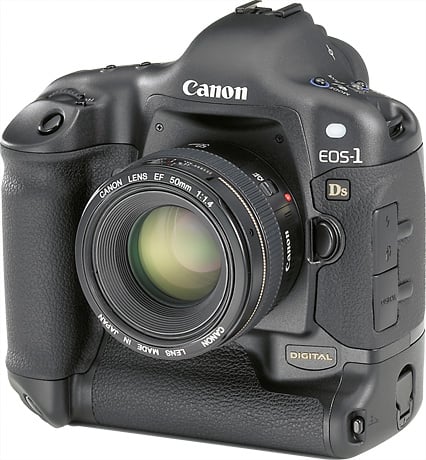
At first, the cost of full-frame cameras and the range of other options made these machines out of reach for most photographers. In these early days, the debate was quieter. Today, full-frame technology is cheaper, widely available, and far trendier. Now, there’s a certain status and stigma associated with sensor size. Consumers consider full-frame cameras the pinnacle of sensor tech, and APS-C, Micro 4/3, and smaller sensors as lesser options.
Sadly, this is part of a larger shift in the entire market. As smartphone cameras improve, they squeeze smaller-sensor cameras out, leaving only “top-of-the-line” cameras and phones. What is a “top-of-the-line” camera?
Today, perception is pushing “full-frame” as the answer. But why? Do you need it? Is it better? And, most importantly, do you need it for underwater photography?
Let’s dive in.
What is a Full-Frame Sensor?
There’s a beautiful, rich history involved in the answer to this question. But, I’ll skip most of it – this is an underwater photography blog after all, and the internet doesn’t like long blogs, no matter how rich or historical they are.
The full-frame sensor traces its history from the 35mm film standard (which, in turn hals from 70mm film that was cut in half lengthways, like 120 years ago ). First patented in 1908, and first sold in 1913, 35mm film cameras gained popularity in the early 1900’s and led to a further modification – a horizontal film feed as opposed to vertical. Achieved in 1925 by Leica, the negative produced by this camera (the Leitz Camera) was 3 x 2, with a size of 36 x 24mm. 36 x 24mm is now the standard we call “full frame,” almost 100 years later.
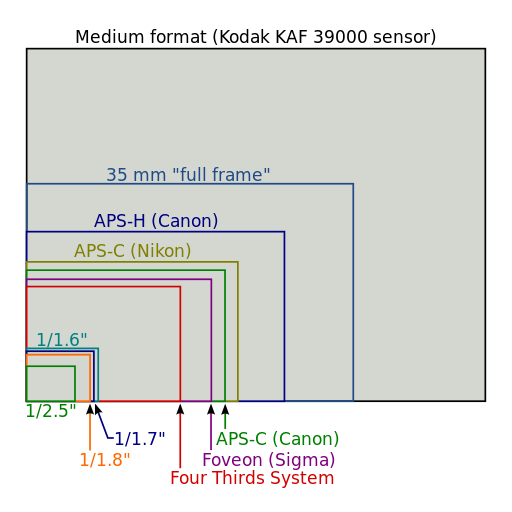
In modern cameras, most digital sensors now fall into one of the sizes illustrated in the figure below, between medium format and 1/2.5.”
What does the Difference Between Sensor Sizes Mean?
In short, a full-frame has a larger sensor than an APS-C or Micro 4/3 sensor. Hopefully that’s clear by now. What this means from a technical perspective is that there is greater flexibility for camera manufacturers to distribute different types of pixels, or photosites, on any given sensor. This is where things can get a little confusing. I think it’s a fascinating topic, albeit very nerdy, so feel free to skip this and move on the “what’s in mean in the real world.”
Resolution vs. Pixel Size vs. Dynamic Range Explained
Let’s say we have two camera sensors, one large, and one small. We have one type of pixel. We can fill the larger sensor with many more pixels than the smaller sensor at this same size. In this case, the larger sensor is higher resolution. Resolution is measured in megapixels. So, in this case, the larger sensor may have 45 megapixels, and the smaller sensor only 20 megapixels because more of the same size pixels fit on that larger sensor.
Now, let’s take that same scenario, but now we have some pixels that are large and some that are small. We give the larger sensor the larger pixels, and the smaller sensor the smaller pixels. The smaller sensor can now have the same number of pixels as the larger sensor, but the pixels of the larger sensor are bigger. This is useful because larger pixels can capture more light per individual, allowing for images with less noise.
This is a frequent source of confusion for prospective camera-buyers. Megapixel counts have been the rage for years ( “wow that camera has 75 megapixels, that’s insane!”) – and sometimes this is as far as people get in their decision process.
Yes, generally, higher resolution is a good thing. But then why is the 12 megapixel Sony A7SIII 1,000 dollars more expensive than the 60 megapixel Sony A7r IV?
This is a perfect example in illustrating differences between pixels, instead of just the number of them. We’ll get really technical for a second and then be done with this.
The Sony A7S III has a sensor with a surface area of 847.3 mm, while the Sony A7r IV has a sensor with a surface area of 849.7 mm. The point here is that the sensor area or size is very similar between these two cameras.
The A7S III has a pixel area of 69.89 µm². The pixel area is a measure of the size of an individual pixel. The A7r IV? A pixel area 13.91 µm².
In summary, the pixels of the A7S III are way bigger than those of the A7r IV, meaning they can capture more information and light per pixel, and produce a lot less noise, while the A7r IV has far more pixels and thus greater resolution.
In terms of dynamic range, or the the range of light intensities from the darkest shadows to the brightest highlights, larger pixels also contribute to better performance because they can capture more information.
What’s the Difference Between Sensor Sizes in the Real World?
One of the comments I hate reading the most when people debate this topic is “well it’s got better image quality.”
This is a terrible, terrible term.”Image Quality.” Makes me shudder. And it’s thrown around so recklessly. Let’s say, as an example, that someone is comparing two camera models. A salesman says, “Well, this camera does this, this, and this very well. In fact, everything it does is better than that other camera. But, FYI that camera is full-frame which means better image quality.” As a photographer, isn’t producing the “best quality images” that we can, kind of the whole point?
So, in this case, all that person hears is “Well, Camera B has better image quality, so let’s do that one.” And then goes on to produce many images that, in fact, are much worse in “quality” than they could have with Camera A.
WHAT IS IMAGE QUALITY? I’m invested at this point, so let’s keep spiraling down this rabbit hole by referencing the great bastion of internet knowledge: Wikipedia.
Wikipedia says:

Did you get all that?
“The level of accuracy in which different imaging systems capture, process, store, compress, transmit and display the signals that form an image. Or, “the weighted combination of all of the visually significant attributes of an image”. And not to be confused with image fidelity, of course!
The point I’m trying to make is that the photographer is mostly in control of the final quality of the image they produce, and to say one has better image quality than another is misleading.
I use a full-frame setup (a Canon R5) and also a Micro 4/3 setup (an OMD EM1) and frankly I never say that the R5 has “better image quality.” This just doesn’t make sense to me. I’ve shot plenty of photos with the EM1 that are better than the equivalent I’ve taken with the R5, it just comes down to the moment, the conditions, and a million other factors. A far better approach is to evaluate your specific needs and the specific differences that result from different sensors. So..
Real World Differences Between Full-Frame and Smaller Sensors
1. Depth of Field
Depth of field is the distance between the closest and furthest objects that are in focus. Or, how much is in focus in front of and behind the object that your camera is actually focused on.
So, if we say something has a greater depth of field, there is more distance that is in focus between the closest and furthers objects; if we say there is shallower depth of field, there is more out of focus in front of and behind the subject that we’re focusing on.
Full-frame sensors are better able to achieve shallow depth of field. For this reason, many portrait photographers crave these larger sensors, because blurring the background and foreground in order to isolate the subject is often a priority for these types of photographers.
Alternatively, there are many scenarios were we do not want a shallow depth of field. Macro photographers usually want more of their subjects in focus to show greater details. Landscape photographers often want more of their wide angle scenes in sharp focus. And, bird and wildlife photographers often want the same – more in focus than not.


2. Dynamic Range
Dynamic range refers to how the camera is able to capture a range of brightness in a scene, from the darkest parts of an image to the brightest parts. Our eyes for context have greater dynamic range than any camera sensor. Measured in stops of light, our eyes can perceive 21 stops of dynamic range. Most modern cameras have dynamic ranges of 10-15 stops.
In terms of sensor size, this gets a bit complicated and we’ll have to make some generalizations. Sensor size is not the only factor in dynamic range, but it can play a part, so we often generalize larger sensors as producing greater dynamic range.
As underwater photographers, we usually appreciate greater dynamic range.
3. Crop Factor
Another real-world consideration is the crop factor, or the angle of view. We think of this in terms of focal length. We use full frame cameras as the standard in referencing focal lengths – a 24mm lens produces a 24mm focal length on a full-frame camera. Alternatively, a 24mm lens on a Micro 4/3 camera produces a 48mm full-frame equivalent – a term you’ll often see. This is what we call the crop factor.
What does the crop factor mean in the real world?
In a lot of cases, it doesn’t really mean much.
This is because lens manufacturers have caught up in producing equivalent lenses. Take for example the widest lenses on full frame. Underwater, I use a Canon EF 8-15mm fisheye, an RF 15-35, and an RF 100mm. These are all full frame. On my Olympus, I use an 8mm fisheye, and a 60mm macro. This translates to a 16mm and 120mm full frame equivalent, directly comparable to the Canon focal lengths.
In terms of longer lenses, I use a 300 F4 from Olympus, which compares to a 600 mm from Canon. In terms of focal length, these are equivalent. However, in terms of resulting images, I will not go so far as to call them equals. This is also a long debate, and Olympus fans love to tout this statistic as a big advantage of M4/3. Yes, it can be an advantage to have a longer focal length as a result of a crop, but a 300mm lens from Olympus is not equal to a 600mm full frame lens from Canon. The resolution of the Canon alone makes this a silly comparison.
As an underwater photographer, I have never felt an advantage to the full-frame system in terms of crop factor. Depending on your lens selection, you have many options for both.
4. Size
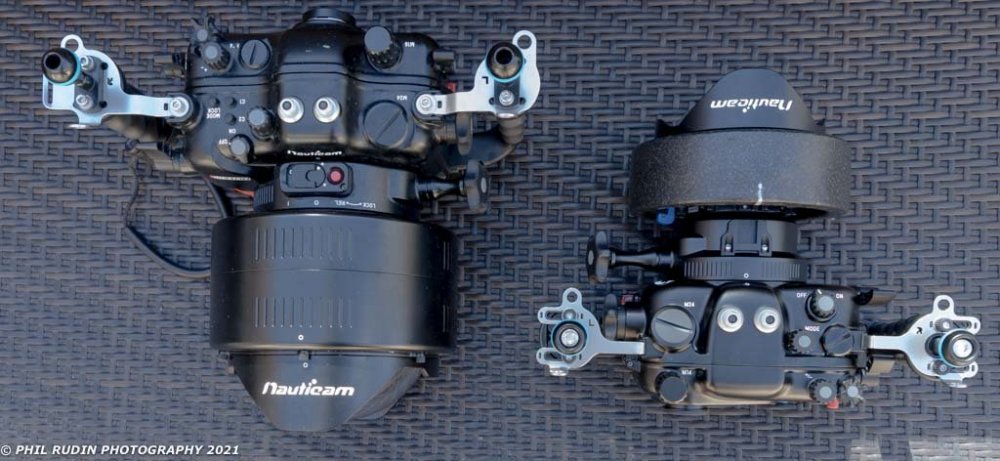
This is one bullet point where the full frame unequivocally loses. There is a massive difference between smaller sensor cameras and full-frame cameras, when you add in a housing and ports. Take for example, my Olympus vs my Canon, below.
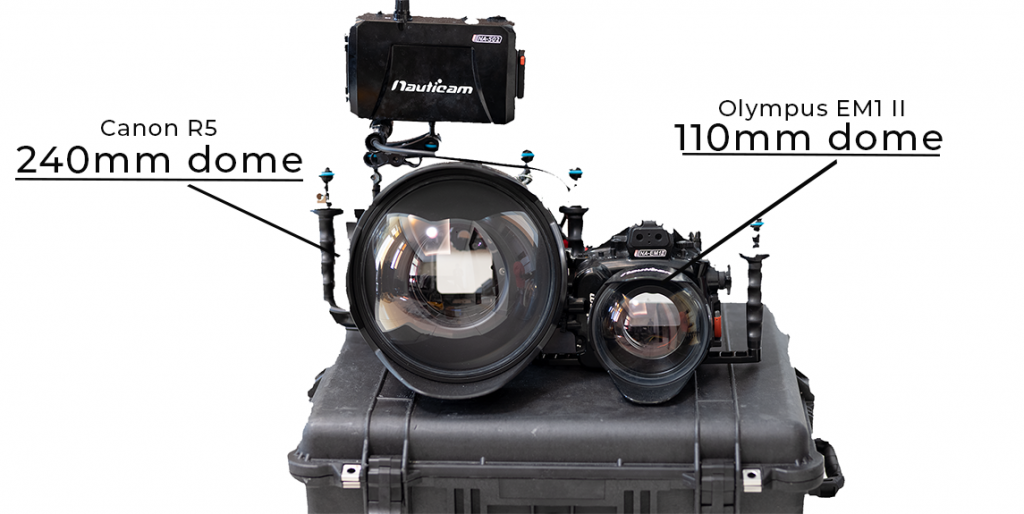
The Canon is far more difficult to travel with, transport, and fit into tight places. This is another thing Olympus and Panasonic fans often scream at the top of their lungs – “the best camera is the one that you’ve got!” Meaning, a huge camera doesn’t do you any good if it’s too big to go where you are. And, they have a point. If you’re shooting in remote, difficult to access areas and need to be streamlined, this could be a major consideration. It sometimes costs me hundreds of dollars to move my full frame gear from location to location – I’m usually able to travel with my m4/3 gear alone for free in regular airplane luggage.
It can also be a lot easier to dive off of small boats like zodiacs with a smaller camera, especially if the boat is crowded.
Lastly, the smaller dome and close focusing abilities of the smaller setup can be an advantage if you’re shooting in very restricted areas, like complex reef habitats with many nooks and crannies.
One final thought on size – full frame sensor cameras are getting smaller and smaller, and this advantage is beginning to shift a bit. The best example of this is the Sony A7C – a full frame camera that is incredibly compact.
Conclusions for the Underwater Photographer
I think I’m a pretty neutral party when it comes to the great full-frame debate. I’ve used small sensors and large ones, and I own both. I don’t really cling to one manufacturer out of loyalty, I just look for the best tools for what I’m doing when it comes to cameras.
In my opinion, smaller sensors like Micro 4/3 can do a better job than full-frame cameras. And, full-frame cameras can do a better job than Micro 4/3 cameras. It all comes down to what you shoot and how you want to use these cameras. “What a non-answer!”
To further spark some drama, I’ll also say that I often actually prefer the characteristics of a Micro 4/3 camera for underwater applications.

I would rather be able to shoot wide angle at F8 like I do with an Olympus 8mm fisheye and not worry about depth of field, which I sometimes have to be careful of with an R5 and a 15-35mm lens, for example. And for macro, I always prefer the wider depth of field of the smaller sensor.
And I would rather travel small and light when possible.

One great advantage of full-frame cameras – the ability to crop in post – is not one I value underwater, because your best photos underwater are going to necessitate you getting physically close to the subject anyways. If you’re far from the subject with lots of water and potential backscatter in the way…odds are a big crop isn’t going to save you.
The bottom line is that for most things, the M4/3 camera can get the job done for less money and less hassle. But there are some scenarios where the smaller sensor does lose, and it has not caught up yet- mostly dynamic range when shooting underwater without strobes, large print applications (which are increasingly rare these days), and the all-important perception factor.
People perceive full-frame cameras as better imaging machines, often without real-world context – I suggest thinking carefully about how the pros and cons may actually effect your work, and checking your ego and what the camera snobs have to say on the forums at the door. 🙂

- Choosing Your First Underwater Camera in 2026 – May 15, 2026
- Strobes or video lights? A head-to-head comparison for the underwater photographer – October 23, 2023
- Shooting Video AND Stills on the Same Dive [Guide] – April 6, 2023
