
 CAD
CAD
Smartphone vs GoPro vs TG-7 for Underwater Photography: Which One Makes the Most Sense?
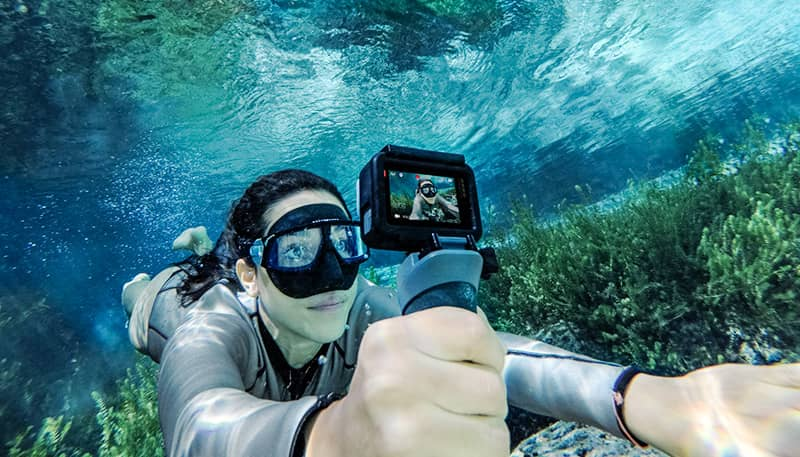
Choosing your first underwater camera sounds simple until you realize these three options solve very different problems. A smartphone feels familiar. A GoPro feels easy. The OM System TG-7 feels like a real camera without the size and cost of a larger rig.
The fast answer is this: if you care most about convenience, a smartphone in a proper housing is the easiest way to start. If you care most about video, a GoPro is the clear favorite. If you want the best mix of serious still photography, close-up capability, and room to grow, the TG-7 is usually the strongest all-around choice.
This guide breaks down where each setup wins, where it falls short, and who it actually suits underwater.
1) Using a smartphone underwater
A smartphone is the most tempting starting point because you already own it. Put it in a dedicated underwater housing and suddenly your everyday camera becomes a dive camera.
That sounds great, and in some cases it is. Modern iPhones have bright displays, and the iPhone 16 and 16 Pro both list peak outdoor brightness up to 2000 nits. That makes framing and reviewing images easier in bright conditions. They are also rated IP68 under controlled lab conditions, but Apple is very clear that water resistance is not permanent and liquid damage is not covered under warranty. In practice, that means a bare phone is not a dive camera. If you take a phone underwater, do it in a real housing.
Where a smartphone works well underwater
A housed phone makes sense when your goals are simple:
- Snorkeling shots
- Vacation memories
- Easy social-first content
- Casual reef scenes in good light
- A backup setup that does not take much spaceIt also helps that you already know the interface.
- There is almost no learning curve. You can shoot, surface, edit, and post from the same device.
Where a smartphone struggles
Underwater, the limits show up quickly.
Phone cameras depend heavily on computational photography, and underwater scenes are hard on that system. Water reduces contrast, strips out warm colors, and creates haze. Tiny sensors and tiny lenses also give you less flexibility once light drops or subjects get smaller.
That matters a lot if you want to photograph coral details, nudibranchs, shrimp, tiny crabs, or fish behavior at close range. Those subjects need reliable close focus, better lighting control, and more consistency than a phone usually gives underwater.
There is also a practical risk: if a housing fails, your camera is not the only thing at risk. It is also your phone.
Best for
Use a smartphone underwater if convenience is the priority and expectations are realistic. It is a smart casual option. It is rarely the best option for someone who wants to build a serious underwater photography hobby.
2) Using a GoPro underwater
A GoPro is the easiest answer for people who already know they care about video.
This is where it shines. GoPro HERO13 Black supports up to 5.3K60 video, 4K120, HyperSmooth 6.0 stabilization, and a waterproof rating to 33 ft / 10 m without a housing. GoPro also sells a protective housing for deeper diving, rated to 196 ft / 60 m. The HERO13 system now also supports HB-Series lens accessories, including a Macro Lens Mod.
Why divers like GoPros
GoPros are built for movement.
That gives you a few big advantages underwater:
- wide field of view for reefs, wrecks, big animals, and buddy shots
- excellent stabilization for swimming footage
- small size and low travel weight
- simple operation
- strong results in bright, open-water video situations
If your idea of underwater content is smooth clips of a dive trip, schooling fish, turtle passes, or snorkeling scenes, a GoPro is hard to beat for the price and size.
Where GoPro falls short
The same traits that make a GoPro great for video also limit it for still photography.
The very wide perspective is not ideal for every subject. Small reef life can look distant unless you get extremely close. Macro work is not its natural strength, even though accessories can help. And while GoPro photos can be useful, most people who care deeply about underwater stills eventually want more control and better close-up performance.
A GoPro is also not the best choice for someone whose dream shots are tiny sea creatures, coral textures, or careful composition with lighting. It is a video-first tool.
Best for
Choose a GoPro if your priority is underwater video, travel convenience, and simplicity. It is especially good for divers who want dynamic footage more than refined still images.
3) Using the OM System TG-7 underwater
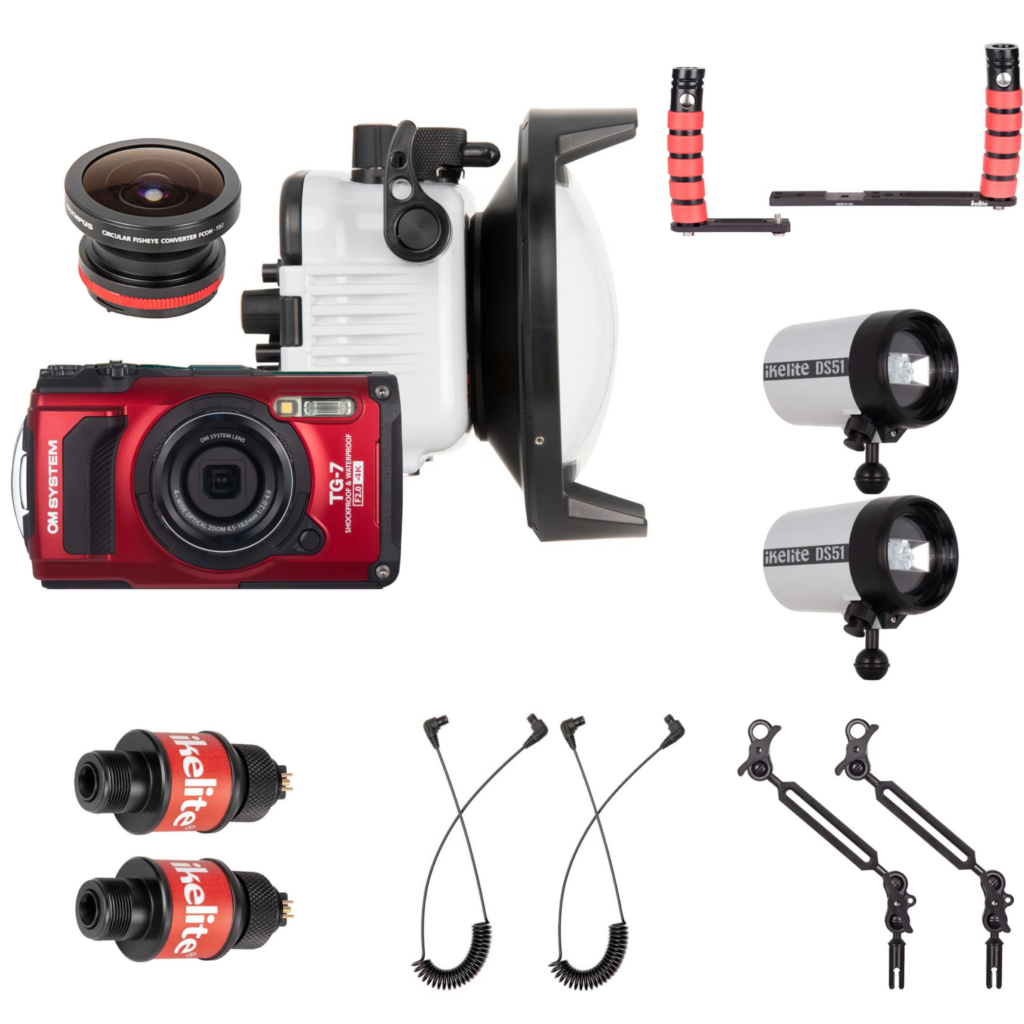
The TG-7 sits in the middle in the best way.It is compact, rugged, and easy enough for beginners, but it behaves much more like a dedicated camera. OM System lists a 12MP BSI CMOS sensor, an f/2.0 25-100mm equivalent lens, RAW capture, 4K video, and waterproofing to 15 m, along with shockproof, crushproof,
and freeze-proof ratings. The TG-7 manual also includes dedicated underwater modes such as Underwater Wide, Underwater Macro, and Underwater Microscope, and it supports shooting as close as 1 cm from the subject.
That is why so many divers keep coming back to it.
Why the TG-7 is so good underwater
The TG-7 solves a very specific problem: people want something small and manageable, but they also want real photographic capability.
That shows up in a few ways.
First, it is much stronger for macro and close-up work than a phone or a stock GoPro setup. If you like nudibranchs, blennies, shrimp, gobies, crab eyes, coral polyps, or other tiny reef subjects, this matters a lot.
Second, RAW capture gives you more editing flexibility. Underwater images often need careful correction for color, contrast, and haze. RAW files give you more room to recover a shot cleanly.
Third, the TG-7 has a real path for growth. You can start simple, then build the system out withlighting and accessories as your skills improve.
Where the TG-7 is weaker
The TG-7 is not perfect.
If your top priority is ultra-smooth action video, the GoPro still feels more natural. If your goal is the cheapest possible entry point, a phone housing may cost less if you already own the phone.
Wide-angle shooting can also become more expensive once you start adding wet lenses and accessories. So while the TG-7 is affordable compared with bigger underwater camera systems, it can still grow into a more serious setup.
Best for
The TG-7 makes the most sense for divers who want the best overall balance of image quality, macro ability, durability, and learning potential in a small package. For many people, it is the most sensible long-term starter camera underwater.
Which camera is best for macro underwater photography?
If your dream subjects are tiny marine life, the TG-7 is the strongest choice here.
That includes:
- nudibranchs
- shrimp
- small crabs
- blennies and gobies
- coral close-ups
- texture details on reefs and wrecks
The reason is simple. Macro underwater photography rewards close focus, control, and consistency. The TG-7 is built around that kind of work in a way that a smartphone or standard GoPro setup is not. Its close-focus modes and underwater macro options make it much better suited to tiny subjects.
Which camera is best for underwater video?
The GoPro wins this part.
If your main goal is cinematic dive footage, action clips, travel videos, or easy social content, the GoPro is the cleanest fit. It gives you strong stabilization, high-resolution video, a wide view, and a very compact form factor.
Which camera is easiest for a beginner?
That depends on what kind of beginner you are.
If you want the least intimidating setup possible, a smartphone in a proper housing is the easiest starting point.
If you want something simple but more photography-oriented, the TG-7 is the better beginner camera.
If you mainly care about video and do not want to think too much, the GoPro is the easiest beginner video tool.
My honest recommendation
If you are just documenting fun dives and want the lightest commitment, a smartphone housing is enough.
If you already know you love video, get the GoPro.
If you think this could become a real hobby and you want to photograph marine life properly, get the TG-7.
That last group is where many people end up anyway. They start with a phone or action camera, then realize they want better close-ups, better stills, more consistency, and more room to improve. The TG-7 is often the point where underwater photography starts to feel serious without becoming overwhelming.
Final takeaway
These three options are not really rivals in the usual sense. They are three different answers to three different priorities.
A smartphone is about convenience.
A GoPro is about video.
A TG-7 is about growth, versatility, and better still photography underwater.
If you pick based on the kind of diving you actually do, the subjects you actually want to shoot, and how serious you want to get, the decision becomes much easier.
If you want, I can also turn this into a version with a meta title, meta description, FAQ block, and internal-link suggestions for direct blog upload.


