
 CAD
CAD
Flex Arms vs Ball-Joint Arms: Which Underwater Lighting Arm System Should You Choose?

A lot of underwater photographers spend time comparing strobes, video lights, and housings, then treat the arm system like a small accessory. In the water, it never feels small. Your arms affect how easily you can position light, how much backscatter you fight, how balanced your rig feels, and how comfortable the whole setup is during a long dive.
The short answer is simple. Flex arms are great when you want a lighter, cheaper, fast-to-adjust setup for compact systems and smaller lights. Ball-joint arms make more sense when you want stronger support, more precise positioning, better accessory options, and a system that can scale with heavier strobes, buoyancy arms, and more advanced shooting.
If you are deciding between the two, the real question is not which one is universally better. The real question is what kind of underwater shooting you do, how heavy your lighting is, and how much control you want from your rig.
What flex arms actually are
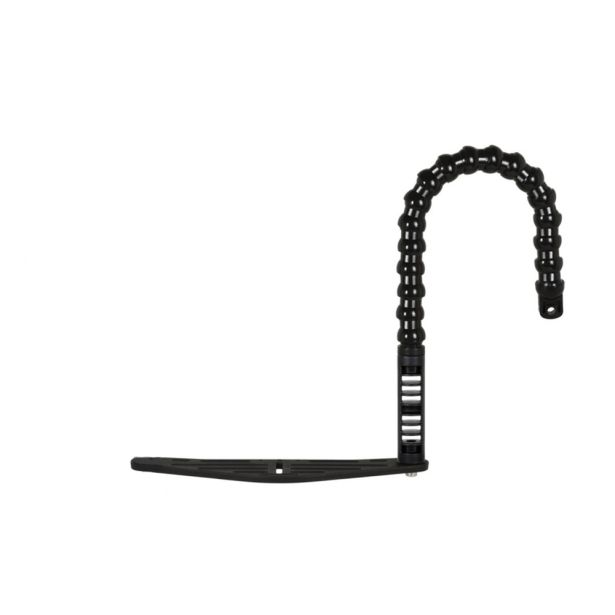
Flex arms, often called flexible arms or Loc-Line style arms, are segmented plastic arms that bend section by section. They are designed to let you reposition a light quickly by hand, without opening and closing clamps every time. Systems like SeaLife Flex-Connect are built around that idea, with modular click-in parts that make setup simple and compact. SeaLife says each Flex-Connect arm adds 7 inches of length and 100 degrees of bending motion.
That ease of use is the main appeal. You grab the light, bend the arm, and keep shooting. For compact cameras, action cameras, smartphone housings, and lighter video lights, that can feel refreshingly straightforward.
What ball-joint arms actually are
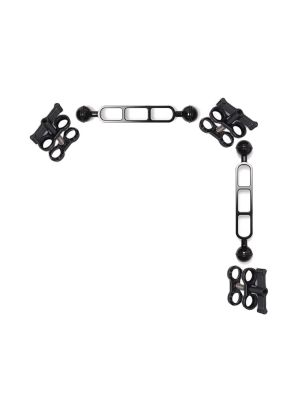
Ball-joint arms use rigid arm segments with 1-inch balls at the ends, connected by clamps. This is the standard architecture used across many underwater systems, and it opens up more configuration options. You can add different arm lengths, buoyancy arms, triple clamps, adapters, lens holders, focus-light mounts, and more. ULCS, for example, describes its clamps as compatible with standard 1-inch ball systems for connecting arms and accessories securely.
This style takes slightly more setup and slightly more thought, but it gives you more precision and a much wider upgrade path. That matters once your rig gets larger or your lighting goals become more specific.
The biggest practical difference underwater
The main difference is control under load.
Flex arms feel fast and intuitive, but they have limits. Once you make them too long or put too much weight on them, they can sag, shift, or hold position less reliably. Multiple sources note that flex arms are better suited to smaller flashes and lights, and that excessive length or heavier gear can make them unstable.
Ball-joint arms handle weight better. They are stronger, more modular, and more stable when extended. That makes them more useful for longer arm lengths, stronger strobes, larger video lights, and wide-angle lighting where you want the light well away from the port to reduce backscatter.
When flex arms make the most sense
Flex arms are a strong choice when your setup is small and your priorities are simplicity, travel-friendliness, and speed.
They work especially well for:
- compact underwater camera systems
- action cameras and smartphone housings
- small video lights
- macro and close-range shooting with lighter gear
- divers who want minimal setup fuss
- travelers who want a lighter rig in the bag
They also tend to cost less upfront. In the original Mozaik comparison, a typical flex-arm setup was described as much cheaper than a similar ball-joint setup, and other retailers make the same general point even if actual pricing varies by brand and length.
For many beginners, that matters. A simpler, lower-cost setup is often the reason flex arms become the entry point.
Where flex arms start to feel limiting
The usual problems show up once your rig grows or your shooting becomes more demanding.
Flex arms can become less stable when they are too long. They are more limited for mounting extra accessories in the middle of the arm. They can also wear over time, especially if sand or grit gets into the segments. Some guides also note that adjusting them can create noise, which is not ideal around shy marine life or when you want quieter video clips.
Buoyancy is another limitation. You can add flotation around some systems, but ball-joint setups give you far more ways to fine-tune trim and lift through floats or dedicated buoyancy arms.
When ball-joint arms make the most sense
Ball-joint arms are the better choice when you want a serious long-term system.
They make the most sense for:
- heavier strobes or video lights
- wide-angle photography where arm extension matters
- mirrorless and DSLR-style underwater rigs
- divers who want better trim and buoyancy control
- photographers who carry accessories like focus lights, clips, or lens holders
- people who want a modular system they can keep upgrading over time
They are also much better when the rig itself is heavy underwater. Buoyancy arms and floats can reduce wrist strain and improve balance, which becomes increasingly important as housings, domes, ports, and larger strobes add negative buoyancy. Both ULCS and Backscatter emphasize the importance of matching buoyancy solutions to the rig so it handles comfortably underwater.
Are ball-joint arms harder to use?
At first, yes, they can feel less immediate than flex arms.
You do need to understand how tight to set the clamps. If the clamps are too loose, the arms move too easily. If they are too tight, every adjustment feels annoying. Good ball-joint systems are usually set so they hold the light but still move with controlled pressure. Once that clicks, many divers find them far more capable than they first expected.
The learning curve is real, but it is short.
Which one is better for macro?
For small macro rigs, flex arms can be very comfortable. Macro usually needs shorter arm positions and closer light placement, so the simplicity of flex arms can work really well with compact cameras and smaller lights.
For advanced macro setups, ball-joint arms still have advantages. They give you more refined positioning, more stability with heavier lights, and more options for mounting accessories. If your macro rig is growing, the ball-joint route usually gives you more room to improve it.

Which one is better for wide-angle?
Ball-joint arms are usually the better choice for wide-angle work.
The reason is straightforward. Wide-angle lighting often benefits from longer arms and more deliberate strobe positioning to keep light off the particles directly in front of the port and reduce backscatter. Longer, more stable arm setups help with that. Mozaik’s earlier guidance on the same question points directly to this advantage, saying ball-joint arms stay stronger even when extended and are better suited to wide-angle shooting.

Travel, packing, and convenience
Flex arms win on convenience.
They are lighter, easier to pack, and less complicated to travel with. Some guides specifically point out that flex arms bend for packing without requiring full disassembly, while aluminum ball-joint systems are heavier and bulkier in the bag.
Ball-joint systems ask more from your luggage, but they give more back in flexibility and performance once you are in the water.
My honest recommendation
If you shoot a compact setup, use smaller lights, travel often, and want something quick and simple, flex arms are a very good choice.
If you are building a rig you plan to grow, using heavier strobes, chasing better balance, or shooting more demanding wide-angle scenes, go with ball-joint arms.
If you are undecided, this rule usually works:
Choose flex arms for simplicity.
Choose ball-joint arms for capability.
That is the cleanest way to think about it.
Final takeaway
Your arm system shapes how your lighting behaves underwater. It changes how far you can push your lights out, how stable they stay, how easy your rig is to travel with, and how balanced everything feels during a dive.
Flex arms are easier, lighter, and more beginner-friendly.
Ball-joint arms are stronger, more expandable, and better suited to demanding setups.
Pick based on the size of your rig and the kind of shooting you actually do. That decision matters a lot more than chasing the most advanced setup on paper.

